
Modernising an established product
Copilot 1.0 already supported important operational workflows. The objective was to modernise the technology and experience without losing the behaviour customers relied on.

Modernising an integrated driver-assistance platform for fleet operations that cannot depend on constant connectivity.
Project overview
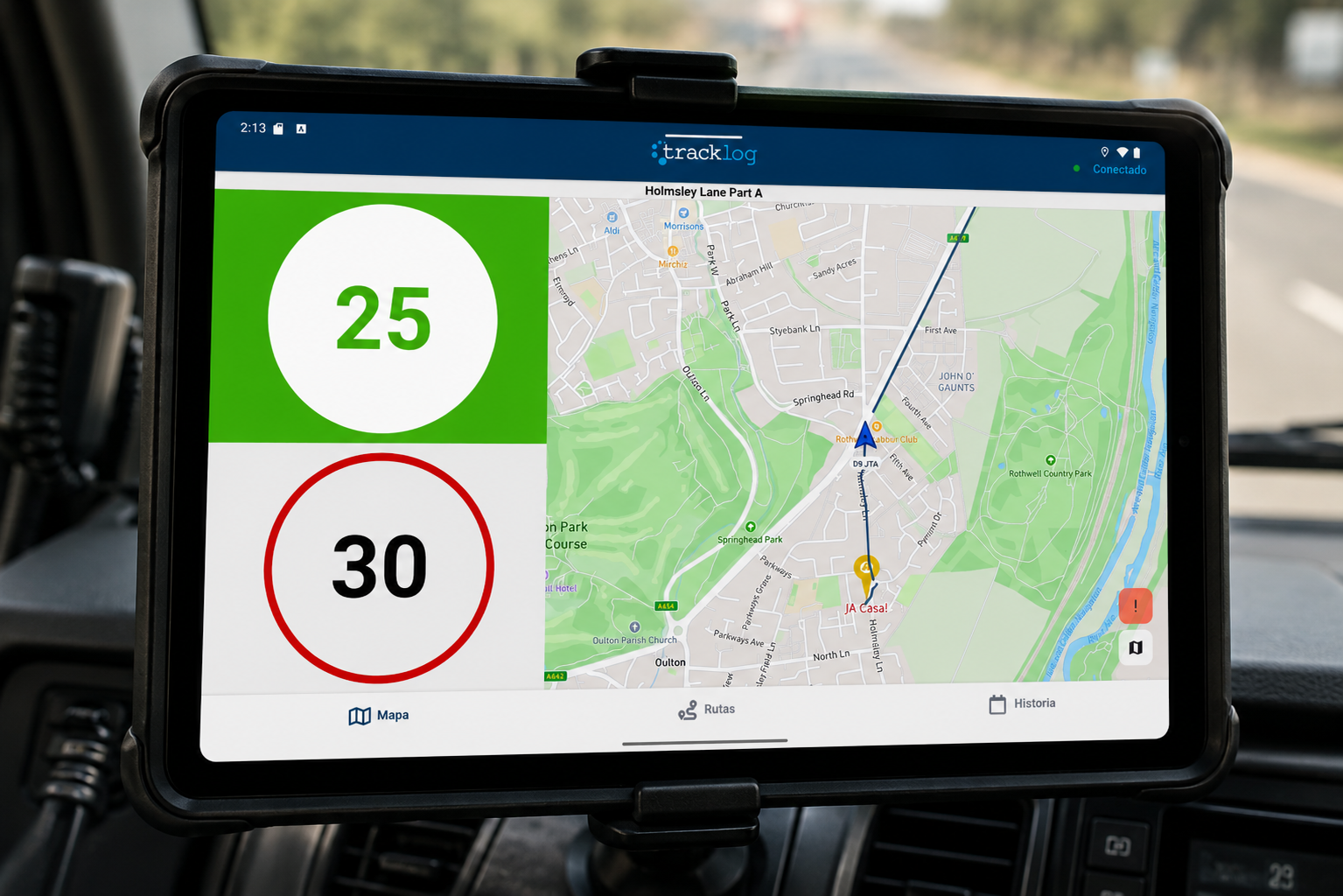
Tracklog Copilot is an Android-based driver-assistance application used alongside the wider Tracklog fleet-management platform.
The project modernised an established MDT product, replacing Copilot 1.0 with a new application and supporting services while preserving the operational functionality customers already depended on.
A key objective was to connect the driver experience more closely with the Tracklog platform. Routes, areas and operational information configured centrally can propagate automatically to devices in the field, reducing manual administration and helping fleet teams keep driver information current.
The application also needed to remain dependable in environments where connectivity could disappear for hours at a time.
The challenge
Tracklog customers regularly operate through mountainous and remote environments where mobile connectivity can be unavailable for extended periods. The new Copilot therefore had to combine centralised fleet management with a driver experience capable of continuing independently in the field.
Copilot 1.0 already supported important operational workflows. The objective was to modernise the technology and experience without losing the behaviour customers relied on.
Drivers can spend many hours in areas with limited or no mobile coverage, meaning the application cannot assume continuous communication with backend services.
Devices remain active throughout extended journeys, stops and working days, placing greater demands on application state, resource management and reliability.
Areas, routes and other operational configuration created in Tracklog needed to reach driver devices automatically without requiring manual updates at each vehicle.
The application had to support operational workflows extending beyond navigation, including convoy management and communication between vehicles.
The software needed to operate reliably across Android tablets and dedicated Howen MDT hardware deployed within vehicles.
Our role
Jublo led the modernisation across the complete Copilot product rather than treating the project as an isolated mobile application rebuild.
Our involvement included product and UX thinking, mobile application development, backend APIs, platform integration, mapping, navigation behaviour, testing and deployment.
Working across both the driver application and the wider Tracklog platform meant changes could be designed as one connected system.
For example, route and area management is controlled centrally within Tracklog, while Copilot is responsible for synchronising and presenting that information appropriately to drivers in the field.
Our approach
Every engagement begins with understanding the organisation, the people involved and the outcome that matters. From there, we challenge assumptions, make deliberate decisions and engineer technology that can continue to evolve.
Identify the operational behaviour customers already relied on within Copilot 1.0 and distinguish it from limitations created by the older technology.
Create a modern Android application with a clearer product architecture and improved integration with the Tracklog platform.
Allow centrally managed routes, areas and operational information to propagate automatically to devices when connectivity is available.
Ensure the driver experience can continue during extended periods without reliable mobile data rather than treating connectivity loss as a failure state.
Test the application under representative field conditions, including long journeys, prolonged device operation and environments with limited coverage.
Capabilities
Android application engineering
Offline-first application design
Fleet platform integration
Route synchronisation
Operational area management
Mapbox mapping
Howen MDT integration
Convoy management
Driver messaging
Backend API development
Application state management
Field testing
Mobile deployment
Legacy application modernisation
Ongoing product development
Built for the road
A mobile application used continuously inside a moving vehicle behaves very differently from one designed primarily around reliable connectivity and short user sessions.
Tracklog customers can operate for hours through mountainous terrain with little or no cellular coverage. Devices may remain powered throughout long journeys and extended stops, while drivers still need access to the operational information already available to them.
Copilot therefore has to treat disconnection as a normal operating condition.
Information is synchronised when connectivity is available, while the application is designed to preserve the information and functionality required for the journey when it is not.
That principle influences data storage, synchronisation, application state and the wider relationship between the MDT and Tracklog platform.
Connected operations
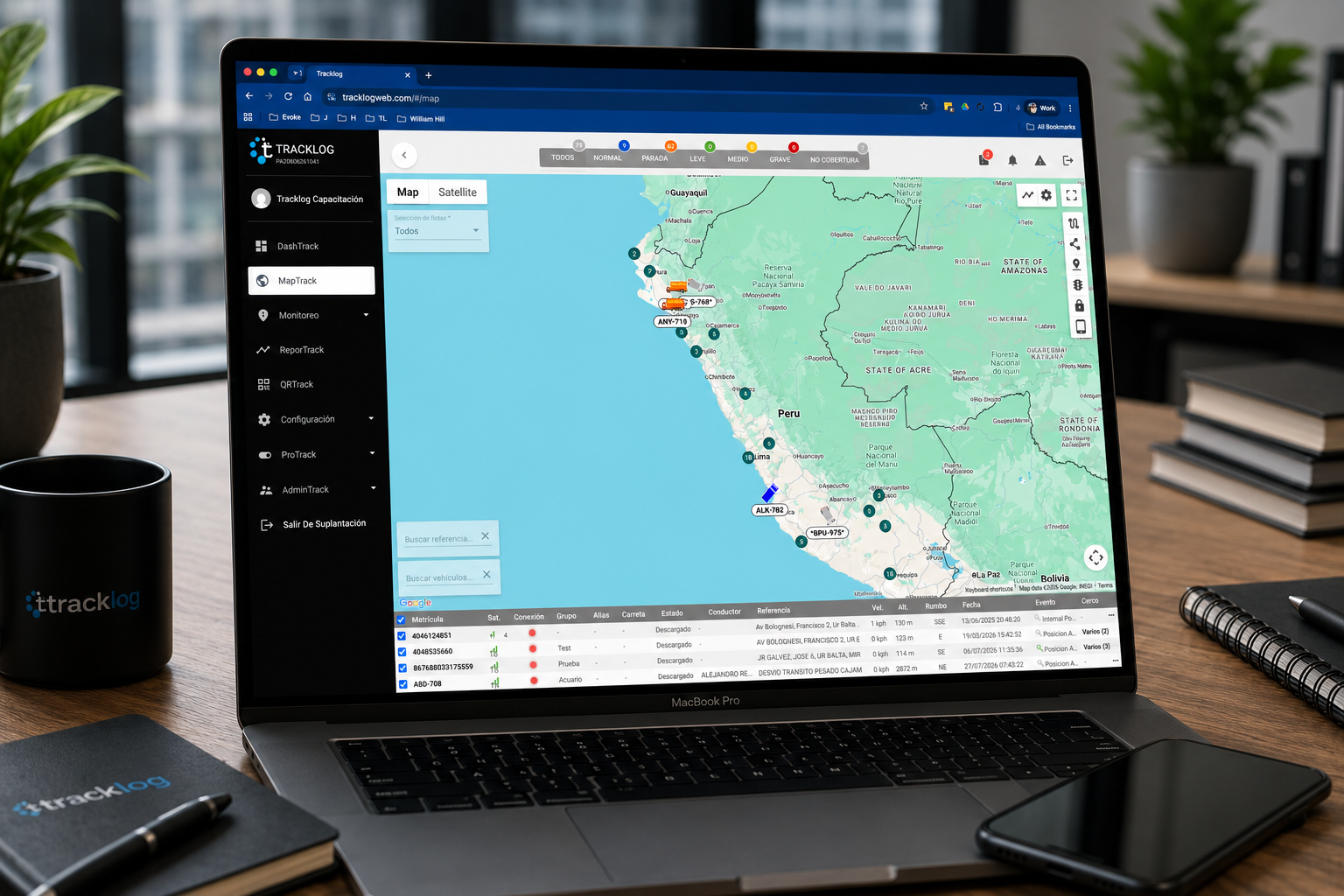
One of the important improvements in the modernised platform is the relationship between Copilot and Tracklog Web.
Fleet teams can maintain operational areas, routes and related information centrally within Tracklog rather than managing individual MDT configurations separately.
Changes can then propagate automatically through the platform to connected devices.
This creates a more manageable relationship between fleet operations and the driver application: central teams retain control of operational configuration, while drivers receive the information relevant to their work without a separate manual deployment process.
Beyond navigation
Copilot also supports operational workflows where vehicles are travelling as part of a convoy.
Convoy-management capabilities provide drivers and fleet teams with greater awareness of the wider movement rather than treating each vehicle as an isolated journey.
Inter-convoy messaging allows information to be shared between participating drivers while keeping communication within the operational system they are already using.
These capabilities reflect the wider purpose of Copilot: not simply providing a map, but supporting the way fleets actually operate in the field.
The project replaced the previous Copilot application with a modern Android product designed around the realities of field operation.
The resulting application combines centrally managed fleet information with local capability on the vehicle device, allowing drivers to continue operating even when communication with the wider platform is temporarily unavailable.
The outcome
Copilot moved from an established legacy MDT application onto a modern mobile technology foundation.
Operational routes and areas can be maintained within Tracklog and distributed through the wider platform rather than managed independently on each device.
The application architecture reflects the reality that drivers may spend extended periods outside reliable mobile coverage.
Navigation sits alongside convoy management, communication and other driver workflows within one connected product.